
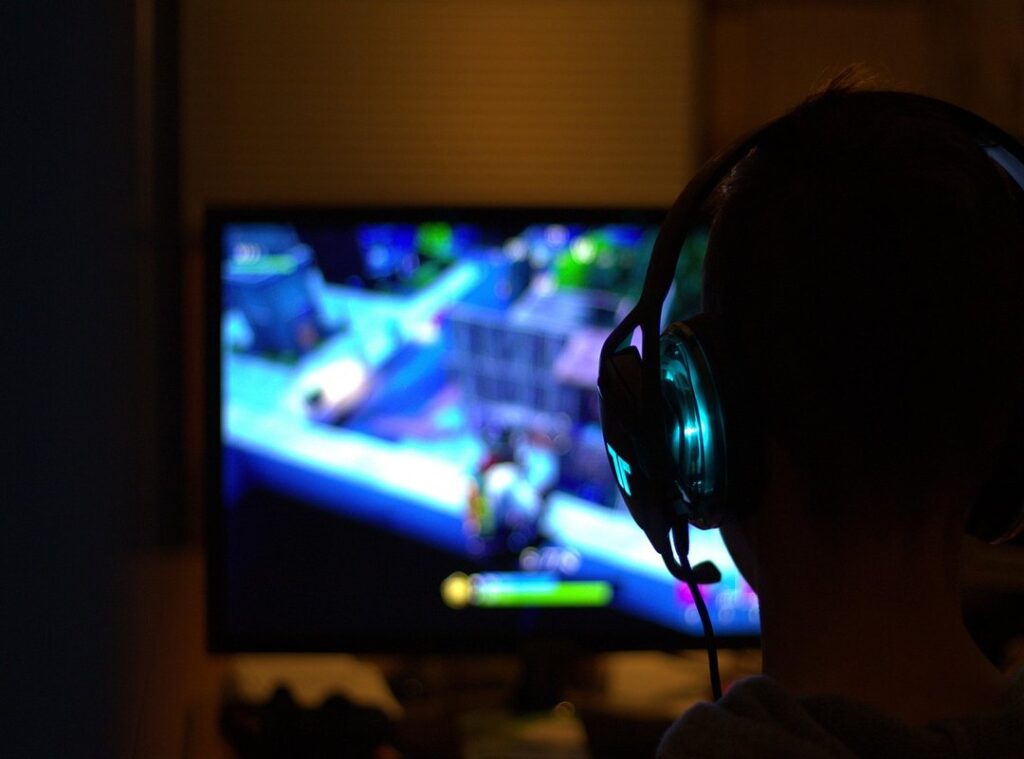
I bought a $400 monitor thinking it would fix my lag.
It didn’t.
You’re drowning in terms like “144Hz” and “G-Sync” and “IPS vs VA” (and) none of it feels useful when you just want to play without tearing, blur, or waiting.
That’s why I wrote this Guide to Gaming Monitors Pmwgamestation.
Not another list of specs nobody explains.
Not another “just buy the most expensive one” cop-out.
I’ve tested twenty-seven monitors. Some made me rage-quit. Others made me replay the same level just to watch how smooth it felt.
A bad monitor kills your reaction time.
A good one doesn’t just look better (it) feels faster.
You don’t need the highest number in every category.
You need the right numbers for your GPU, your games, and how you play.
Are you chasing competitive FPS? Or losing yourself in open-world RPGs? Does your PC even push 144 frames?
This isn’t theory.
It’s what worked (and) what wasted my money.
By the end, you’ll know exactly which specs matter (and which ones are noise). You’ll match the monitor to your setup (not) the other way around. And you’ll walk away confident you picked the right one.
Screen Size vs. Resolution: What Actually Matters
I measure screen size diagonally. Not width. Not height.
Diagonal. That’s why a 27-inch monitor isn’t 27 inches wide.
You see 24-inch, 27-inch, and 32-inch all the time. 24-inch fits tight desks. Good for fast-paced games. 27-inch is the real sweet spot for most people. 32-inch? You’ll need serious desk space.
And strong neck muscles (just kidding… mostly).
Resolution is pixel count. 1080p = 1920 × 1080 pixels. 1440p = 2560 × 1440. 4K = 3840 × 2160. More pixels = sharper image. But your GPU has to push all those pixels.
Every frame.
A weak card chokes on 4K. A mid-tier card handles 1440p fine. Even an older GPU keeps up at 1080p.
Especially in esports titles.
So what should you pick? If you’re on a budget or play CS2 or Valorant: 1080p. If you want balance (detail) and performance: go 1440p.
If you’ve got a 4090 and money to burn: sure, 4K. But ask yourself. Do you really need it?
The Guide to Gaming Monitors Pmwgamestation breaks this down without fluff. No jargon. No hype.
Just real talk about what works. You don’t need the biggest number. You need the right match.
What’s your current setup? Are you chasing sharpness (or) smooth frames?
Speed Isn’t Flashy. It’s Real
Refresh rate is how many times per second your screen redraws the image. Measured in Hz. A 60Hz monitor updates 60 times a second.
A 144Hz one does it 144 times.
You feel the difference before you think it. In a fast shooter, that extra smoothness isn’t luxury (it’s) reaction time.
Response time is how fast a pixel switches from one color to another. Measured in milliseconds. Lower is faster. 1ms means near-instant change. 5ms means slight delay.
Ghosting? That blurry trail behind moving objects? That’s slow response time biting you.
I’ve played the same map on a 60Hz/5ms panel and then a 240Hz/1ms one. It wasn’t better. It was different.
Like switching from walking to sprinting mid-fight.
For serious gaming, aim for at least 144Hz and 5ms or less. For competitive play? 1ms is non-negotiable. Not because it looks prettier.
But because your muscle memory locks in faster.
You don’t need 360Hz to enjoy games. But if you’re chasing tighter aim or cleaner motion, speed adds up. Fast refresh + fast response = less guessing, more doing.
This is why the Guide to Gaming Monitors Pmwgamestation starts here. Not with ports or stands, but with what your eyes and hands actually use.
Is your current monitor holding you back without you even realizing it? Yeah. Probably.
IPS vs VA vs TN: Which Panel Actually Fits You

I’ve bought and tested dozens of monitors.
None of them felt right until I understood what each panel type actually does.
TN panels are fast. Like, blisteringly fast. They’re the go-to for competitive shooters where every millisecond counts.
But colors look washed out. Viewing angles? Terrible.
Tilt your head and the screen goes black (not kidding).
IPS panels give you accurate colors and wide viewing angles. You can walk around the monitor and still see the same image. Response times improved a lot (but) they’re not quite as snappy as TN.
VA panels sit in the middle. Great contrast. Deep blacks.
Better colors than TN but not as precise as IPS. Response time is decent. Not perfect, not awful.
So what do you care about most? Speed? Go TN.
Color accuracy and immersion? IPS wins. Deep blacks without sacrificing too much color?
VA.
If you’re still stuck, check out this guide. It breaks down real-world trade-offs without the jargon.
learn more
This isn’t a “Guide to Gaming Monitors Pmwgamestation” list of specs.
It’s about picking what works for you.
Screen Tearing Sucks. Here’s How to Stop It.
You’re playing a fast game. Then—rip (the) image splits in half. That’s screen tearing.
It breaks focus. It feels cheap.
I’ve seen it ruin matches. You aim. The screen tears mid-snap.
You miss. You curse. (It’s not your reflexes.
It’s the monitor.)
G-Sync needs an NVIDIA GPU. FreeSync needs AMD. But here’s the twist: many FreeSync monitors now work with NVIDIA cards too.
Adaptive sync fixes that. G-Sync and FreeSync both do one thing: match your monitor’s refresh rate to your GPU’s frame rate (on) the fly.
They’re labeled “G-Sync Compatible.”
So check your GPU first. Not the monitor. Your card decides what sync tech you can actually use.
You don’t need both. You just need the right one for your setup.
FreeSync is usually cheaper. G-Sync often has stricter certification. But real-world difference?
Minimal (if) the monitor is well-reviewed.
Ask yourself: what GPU do I already own? That answer locks in your choice.
Don’t overthink it. Pick the sync tech your card supports. Turn it on.
Done.
For more hardware context, check out the How to Build a Gaming Pc Pmwgamestation guide.
Your Monitor Is Waiting
I picked apart every spec so you wouldn’t have to guess. You were stuck. Confused by numbers that meant nothing.
Frustrated that “144Hz” sounded cool but didn’t tell you if it’d actually fix your ghosting in Valorant.
That confusion ends now. Resolution tells you how sharp it looks. Refresh rate tells you how smooth it feels.
Response time tells you if your crosshair blurs when you snap it. Panel type tells you if colors pop or wash out. Adaptive sync tells you if tearing ruins your immersion.
None of that matters unless it matches your setup. Your GPU can’t push 240Hz at 4K? Don’t buy that monitor.
You play Elden Ring more than CS2? Prioritize contrast and color over raw speed. You’re on a tight budget?
A solid 1080p 144Hz IPS panel beats a flashy 165Hz VA you can’t afford.
Write down your top two needs right now. Not three. Not five.
Two. “Low input lag for FPS” or “deep blacks for RPGs” (that’s) enough.
You came here because you wanted clarity. You got it. Now stop reading specs.
Go test monitors in person. Feel the motion. See the blacks.
Watch how fast it wakes up.
The Guide to Gaming Monitors Pmwgamestation gave you the map. Your turn to drive. Grab your wallet.
Open a tab. Pick one. Play better tomorrow.
 Qynovox Holt serves as a cornerstone of the Zhimbom team, bringing a sharp analytical eye to the world of competitive esports tactics and multiplayer strategy. With a deep understanding of the meta-shifts that define modern gaming, Holt focuses on breaking down complex gameplay into actionable insights for the community. By analyzing high-level play and strategic maneuvers, they help bridge the gap between amateur play and professional-grade performance, ensuring the audience is always ahead of the curve.